English




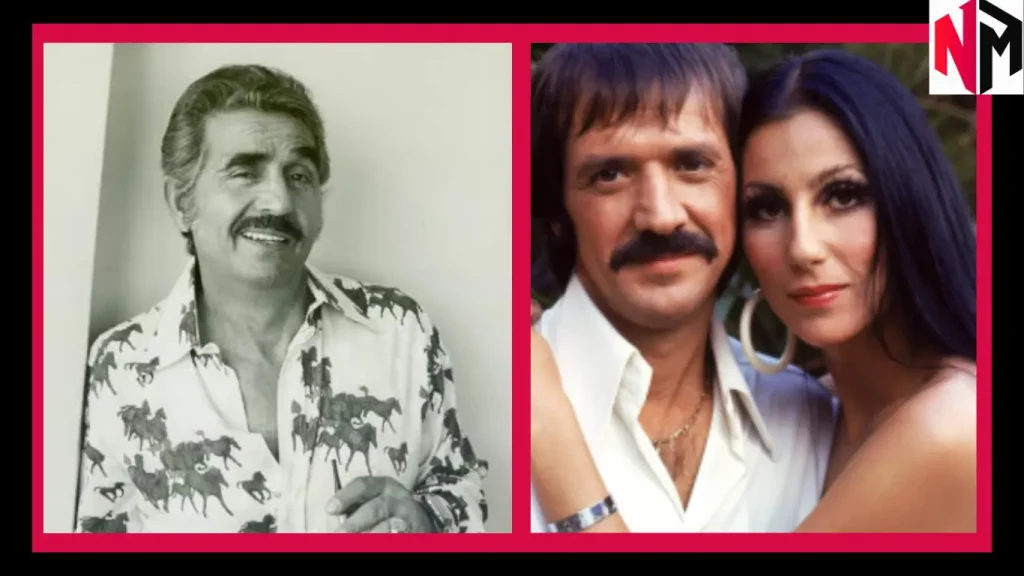










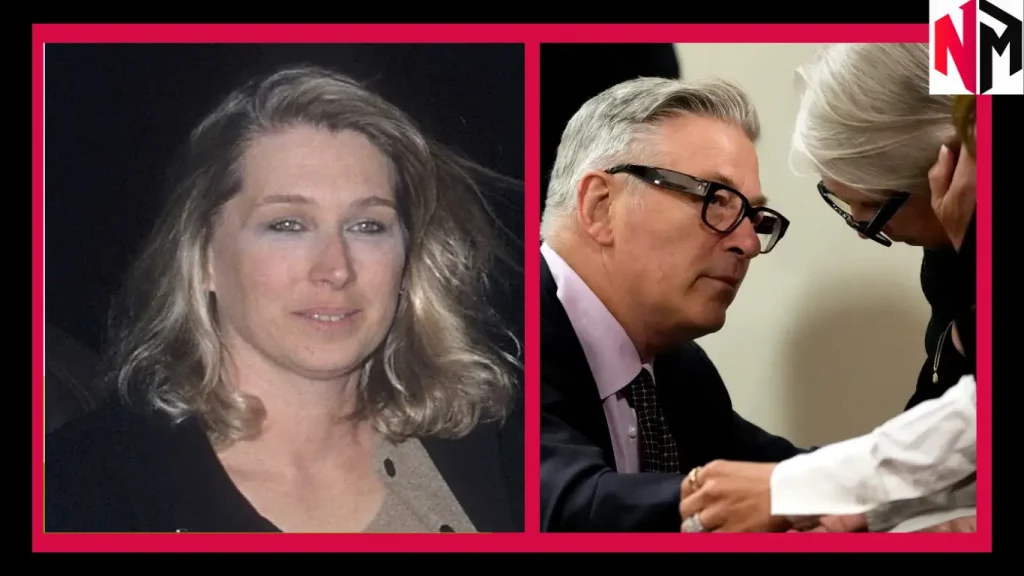


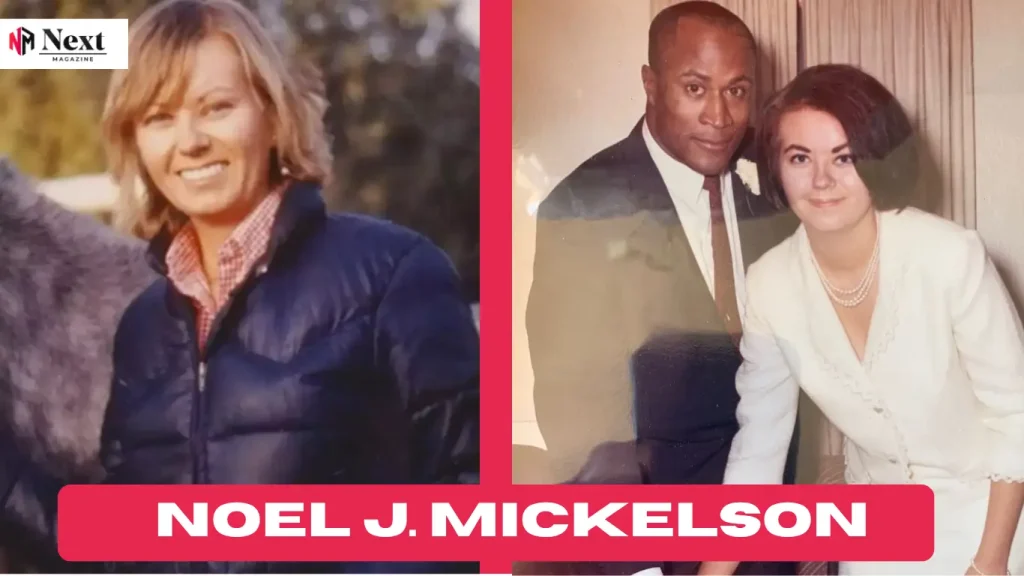









John Amos’ Ex-Wife Noel J. Mickelson: The Artist Behind the Name

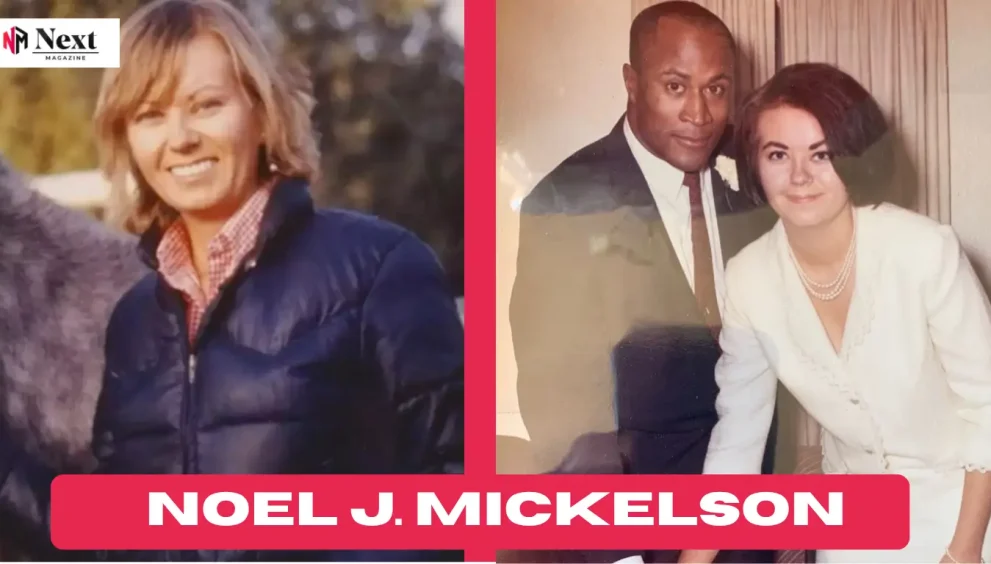
Noel J. Mickelson, best known to the public as the ex-wife of legendary American actor John Amos, is far more than a footnote in someone else’s biography. She is a talented and dedicated visual artist whose creative identity, personal courage, and quiet resilience define her story in ways that go well beyond her marriage to one of Hollywood’s most respected names. While her relationship with John Amos placed her at the edge of the entertainment world’s spotlight, Noel consistently stepped back from it — choosing canvas over celebrity, craft over cameras, and a life lived on her own terms.
To understand Noel J. Mickelson fully, one must look at the whole person: a woman of creative depth, principled choices, and lasting influence — not merely as the ex-wife of a famous man, but as an individual whose life carries its own remarkable weight.
Who Is Noel J. Mickelson?
Noel J. Mickelson is an American artist whose life intersected with public history through her marriage to John Amos — the iconic actor celebrated for his roles in Good Times, Roots, and Coming to America. Born and raised in the United States, Noel developed an artistic sensibility early in life that would remain central to her identity long after her marriage ended and long after the world stopped associating her name with her former husband’s career.
She is white, and her marriage to John Amos — a Black man — took place during one of the most racially charged periods in modern American history. That single fact alone places their relationship in a context that is historically significant. But beyond the social statement their union represented, Noel was building a life grounded in creativity, family, and genuine personal conviction. She was not a passive figure in someone else’s story. She was actively writing her own.
Noel J. Mickelson and John Amos: The Relationship That Made Headlines
John Amos and Noel J. Mickelson married in the late 1960s, a period when interracial marriages, though newly protected by the Supreme Court’s 1967 decision in Loving v. Virginia, were still deeply controversial across much of American society. For a Black man rising in the entertainment industry — where image management was everything and racial politics shaped every career decision — choosing a white wife was not a neutral act. For Noel, choosing John was equally bold.
Their marriage was not a publicity stunt or a social experiment. It was a genuine relationship between two people who found something real in each other, at a time when the world around them made that choice extraordinarily difficult. Together, they built a family that would go on to leave its own mark on American culture.
The couple had two children:
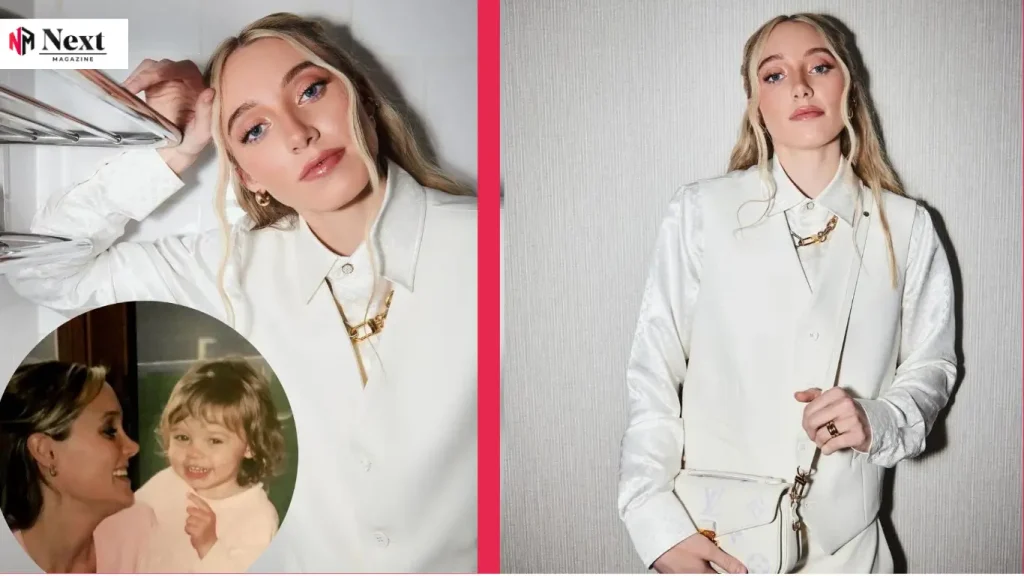
- Shannon Amos — who became a respected producer, author, and transformational life coach, building a career defined by creativity and purpose
- K.C. Amos — who also pursued a path in entertainment and creative work, reflecting the household values of artistic seriousness and ambition
Their marriage eventually ended in divorce, but the bond they created through their children and the values instilled in them during those years remained very much alive in the people those children became.
Noel J. Mickelson the Artist: A Creative Life Beyond the Marriage
What separates Noel J. Mickelson from the typical narrative of a celebrity ex-wife is this: she had a fully developed identity outside of her marriage — and that identity was rooted in art. She was a visual artist before she was John Amos’s wife, during their marriage, and after it ended. The creative practice was hers alone, and it continued regardless of what was happening in her personal life.
Her artistic work spanned multiple mediums and reflected a sensibility that was both technically grounded and emotionally authentic. She was not an artist in the casual sense — someone who painted on weekends for relaxation. She was a serious practitioner who understood that meaningful creative work demands sustained attention, honest self-examination, and the courage to keep making things even when no one is watching.
Her work across mediums included:
- Painting — characterized by strong compositional awareness and a sophisticated use of color that reflected years of practice rather than instinct alone
- Drawing — her foundational skill in draftsmanship gave her work a structural confidence that set it apart from more decorative approaches to visual art
- Mixed Media — she embraced the layering of materials and textures, a willingness to experiment that signals an artist more interested in discovery than in repeating what already worked
- Sculpture — her engagement with three-dimensional form gave her a spatial intelligence that enriched her work across all mediums
This breadth of practice was not accidental. It reflected the mind of an artist who saw every medium as a different language, each capable of saying something the others could not.
Case Study: When Personal Life and Artistic Life Collide
Noel J. Mickelson’s life offers a compelling case study in how artists navigate the tension between private creative identity and public personal narrative. For many artists, a high-profile relationship can swallow their creative identity entirely — they become defined by who they love rather than what they make. The work disappears behind the biography.
Noel did not allow that to happen. Consider the pattern her life reflects:
- During her marriage to one of television’s most prominent Black actors in the 1960s and 70s, she maintained an artistic practice that was entirely her own
- After her divorce, she did not leverage the relationship for public attention, media coverage, or a platform from which to relaunch herself
- She continued working as an artist on her own terms, without the scaffolding of her former husband’s fame to prop up her profile
This is genuinely rare. The entertainment world is full of examples of people who attach their identity so thoroughly to a famous partner that when the relationship ends, they lose not just the relationship but the self. Noel’s story moves in the opposite direction. The divorce clarified rather than diminished her sense of who she was — an artist, a mother, a woman of deep personal integrity.
For any artist navigating the complicated intersection of personal life and creative identity, her example is worth studying. Attachment to another person’s story — even a great one — cannot substitute for the harder work of building your own.
The Racial Landscape of Their Marriage and Its Meaning
To properly honor Noel J. Mickelson’s story, the racial dimension of her marriage to John Amos cannot be treated as a minor biographical detail. It was, in fact, one of the most defining choices of her life — and one that required a form of courage that is easy to underestimate from a contemporary vantage point.
In the late 1960s, interracial couples in America faced:
- Social rejection from both white and Black communities, many of whom viewed cross-racial relationships with suspicion or outright hostility
- Family opposition, which in many cases was severe and prolonged, with relatives cutting off contact or expressing public disapproval
- Professional risk for John Amos, whose career in an industry hyper-attuned to public perception could have been damaged by choices that alienated audiences
- Everyday hostility in public spaces, neighborhoods, and social settings where their presence as a couple was unwelcome
Noel walked into all of that with her eyes open. She did not marry John Amos in spite of what it would cost her — she married him because she chose him. That distinction matters enormously. It reveals a woman who made decisions based on personal conviction rather than social convenience, a quality that is visible not just in her choice of partner but in every major decision of her adult life, including her choice to remain a committed artist in private rather than a public figure by proximity.
What John Amos Has Said About His Past
John Amos, throughout his long and distinguished career, carried himself with the kind of dignity that speaks to a man shaped by meaningful relationships and hard-won wisdom. His career — spanning decades and including some of the most culturally significant television productions in American history — was built on a foundation of personal experience, including his years with Noel and the family they created together.
Shannon Amos, their daughter, has spoken publicly about the values she grew up with — creativity, discipline, a sense of purpose, and a commitment to doing meaningful work. These are not values that emerge in a vacuum. They are instilled, modeled, and reinforced by parents who live them. Noel’s fingerprints are on that legacy in ways that are rarely acknowledged but are unmistakably real.
Noel J. Mickelson’s Artistic Legacy: Quiet but Lasting
The question of legacy is complicated for any artist who chooses privacy over profile. In a culture that measures significance largely through visibility — social media presence, gallery representation, critical coverage — an artist who works outside those systems can seem, from the outside, as though they barely exist.
But artistic legacy is not always loud. Sometimes it is transmitted directly — from parent to child, from teacher to student, from one human being to another in the intimacy of a shared life. Noel J. Mickelson’s legacy operates in exactly this way.
Her daughter Shannon’s creative career reflects values absorbed from a mother who took art seriously. Her son K.C.’s path through entertainment reflects a household where creative work was understood as real work — worthy of dedication, deserving of effort. The ripple effects of a serious artistic practice, lived consistently over decades, are not always traceable to their source. But they are real.
Why Her Story Deserves More Attention
There is a persistent tendency in popular media to define women primarily through their relationships to famous men. Noel J. Mickelson has been subject to exactly this kind of flattening — reduced, in most accounts, to the phrase “John Amos’s ex-wife” as though that were the whole of her. It is not even close.
She was an artist of genuine seriousness and skill. She was a woman who made courageous personal choices in a deeply divided America. She was a mother whose influence shaped two creative individuals who have gone on to contribute meaningfully to their fields. She was a person who understood the difference between a life that looks significant and a life that is significant — and who consistently chose the latter.
Her story deserves more attention not because of who she was married to, but because of who she is.
Frequently Asked Questions (FAQs)
Who is Noel J. Mickelson? Noel J. Mickelson is an American visual artist and the ex-wife of acclaimed actor John Amos. She is the mother of Shannon Amos and K.C. Amos, and has maintained a private but creatively active life throughout the decades following her divorce.
When did Noel J. Mickelson and John Amos get married? Noel J. Mickelson and John Amos married in the late 1960s, shortly after the Supreme Court’s landmark Loving v. Virginia ruling made interracial marriages legally protected across all fifty states.
Why was their marriage considered significant? Their interracial marriage took place during a period of intense racial tension in America. As a white woman married to a prominent Black actor, Noel faced real social and cultural pressures — making their relationship a quiet but meaningful act of personal courage.
What kind of artist is Noel J. Mickelson? She is a visual artist who has worked across painting, drawing, mixed media, and sculpture. Her practice is defined by technical discipline, emotional honesty, and a commitment to creative growth over public recognition.
Do Noel J. Mickelson and John Amos have children together? Yes. They have two children — Shannon Amos, a producer, author, and life coach, and K.C. Amos, who has worked in entertainment. Both reflect the creative values of a household shaped by serious artistic thinking.
What is Noel J. Mickelson doing now? Noel J. Mickelson continues to live privately, consistent with her lifelong preference for keeping her personal and creative life away from public scrutiny. Her influence endures most visibly through the careers and values of her children.
How did Noel J. Mickelson’s artistry influence her family? Her serious, sustained approach to creative practice modeled for her children what it means to treat art as a discipline rather than a pastime. Shannon Amos in particular has spoken about the values instilled during her upbringing — values of purpose, creativity, and depth — that are directly traceable to her mother’s influence.
Final Thoughts
Noel J. Mickelson — ex-wife of John Amos, visual artist, mother, and woman of quiet extraordinary conviction — is a figure whose full story has rarely been told with the depth it deserves. She stood at the intersection of race, art, family, and personal identity during one of America’s most turbulent periods, and she navigated all of it with a dignity that speaks for itself.
Her marriage to John Amos was significant. Her role as a mother was profound. But her identity as an artist — sustained, private, serious, and entirely her own — is perhaps the most defining thing about her. It is the thread that runs through everything else, the constant in a life full of change.
Noel J. Mickelson did not need the world’s attention to build something real. She had her work, her children, and her convictions. For an artist of her depth, that was always enough.
For More Visits: Nextmagazine.blog
Also Read: Amy Sherrill: Tim Duncan’s Former Wife — Biography, Marriage, Children, Career & 2026 Update