English










































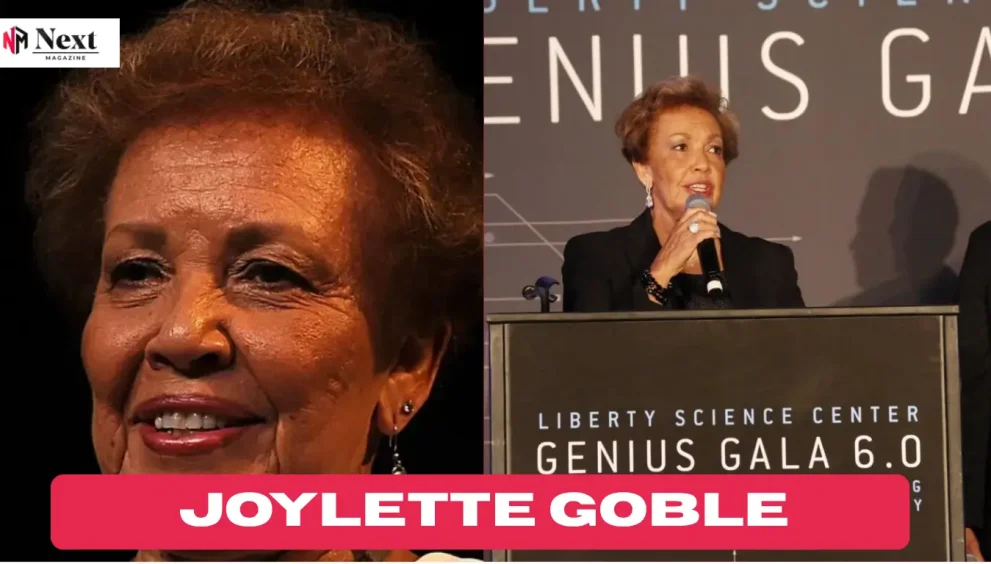
Joylette Goble: The Daughter of a NASA Legend and a Legacy Built on Excellence

Introduction
Joylette Goble is one of three daughters of Katherine Johnson, the legendary NASA mathematician whose calculations were critical to the success of America’s earliest space missions. While her mother became a globally recognized figure — immortalized in books, documentaries, and the acclaimed film Hidden Figures — Joylette has carried that remarkable legacy with quiet dignity, becoming a respected voice in her own right when it comes to honoring her mother’s contributions to science, education, and civil rights history.
Understanding Joylette Goble means understanding the household she grew up in: one defined by intellectual rigor, racial perseverance, and an unshakeable belief that education was the path forward for Black Americans in a deeply segregated nation.
Who Is Joylette Goble?
Joylette Goble is the daughter of Katherine Johnson and her first husband, James Francis Goble. She was born into a family that placed tremendous value on academic achievement and personal excellence. Katherine Johnson, who worked at NASA’s Langley Research Center in Virginia, was herself a child prodigy — and she carried those same expectations of curiosity and hard work into her home.
Joylette is named after her maternal grandmother, Joylette Roberta Coleman, which reflects a deep family tradition of honoring lineage and history. She has two sisters — Constance and Katherine — and together the three Goble daughters grew up witnessing their mother navigate a professional world that routinely underestimated both her gender and her race.
What sets Joylette apart is not simply her connection to a famous mother, but the active role she has taken in preserving and amplifying Katherine Johnson’s story. She has participated in interviews, public events, and educational outreach efforts that bring her mother’s legacy to new generations of students, particularly young women and girls of color who are being encouraged to pursue STEM careers.
Growing Up in the Shadow of Greatness
Growing up as a daughter of Katherine Johnson was, by any measure, an extraordinary experience. Katherine was not simply a government employee — she was a woman breaking racial and gender barriers at one of the most competitive scientific institutions in American history. At NASA, she worked alongside engineers and physicists who initially resisted the idea of a Black woman participating in critical mission calculations.
For Joylette and her sisters, their mother’s career was simply a fact of life — but a deeply formative one. Key elements of their upbringing included:
- An emphasis on education above all else — Katherine Johnson famously believed that being prepared was the most powerful weapon against discrimination, and she instilled that belief in her daughters from an early age.
- Exposure to a professional world of science and mathematics, which normalized high-level intellectual work in ways that shaped all three daughters’ worldviews.
- A home that balanced warmth and discipline — by all accounts, Katherine was both a nurturing mother and a demanding one in the best sense of the word.
- An awareness of racial injustice without bitterness — the Johnson household cultivated resilience, not resentment, in the face of the systemic racism their mother encountered daily at work.
These influences did not produce daughters who sought celebrity. They produced women who understood the value of substance over spectacle — a quality that Joylette has demonstrated consistently throughout her life.
The Loss of James Francis Goble and Its Impact on the Family
Joylette’s father, James Francis Goble, died of a brain tumor in 1956, when Joylette was still young. This loss was a defining moment for the family. Katherine Johnson, already remarkable in her own right, was now a widowed mother of three daughters while simultaneously excelling in one of the most demanding scientific environments in the country.
The way Katherine responded to this tragedy — with grace, determination, and an even deeper commitment to her work and her children — left an indelible impression on Joylette. Watching her mother refuse to be diminished by grief or circumstance taught Joylette a lesson that no classroom could fully replicate: that strength is not the absence of hardship, but the decision to move forward despite it.
Katherine eventually remarried, wedding Colonel James A. Johnson in 1959, and the family grew into a blended household. But the early years shaped by loss and resilience remained a foundational chapter in Joylette’s understanding of who she was and where she came from.
Joylette Goble as a Guardian of Katherine Johnson’s Legacy
When Katherine Johnson’s story began to reach a mainstream audience — first through Margot Lee Shetterly’s book Hidden Figures and then through the 2016 film — Joylette stepped into a new kind of public role: that of a living witness to history. She became one of the primary family voices helping audiences understand the real Katherine Johnson behind the cinematic portrayal.
This role has given Joylette a platform she has used thoughtfully. Her contributions to her mother’s legacy include:
- Participating in documentary interviews and public screenings of Hidden Figures and related projects, providing firsthand context about her mother’s personality, values, and home life.
- Engaging with educational institutions to support STEM outreach programs aimed at young girls and minority students.
- Correcting the public record where necessary — ensuring that her mother’s story is told accurately and not oversimplified for dramatic effect.
- Honoring her mother’s humility by consistently redirecting attention from celebrity to substance, reflecting Katherine’s own preference for being remembered for her work rather than her fame.
In doing so, Joylette has become more than a famous woman’s daughter. She has become a custodian of an important chapter in American history.
A Case Study in Legacy Stewardship
Joylette Goble’s role in managing and amplifying her mother’s legacy offers a compelling case study in what might be called intentional legacy stewardship — the conscious, active effort to ensure that a significant life story is preserved, accurately represented, and meaningfully extended into the future.
Compare her approach to that of other children of celebrated historical figures. In many cases, the children of iconic parents fall into one of two patterns: they either retreat entirely from public life to protect their own identity, or they over-leverage the famous name for personal gain. Joylette has charted a different course entirely.
She has remained visible enough to be a credible and authoritative voice on her mother’s life, while avoiding the kind of self-promotion that would shift focus away from the story she is trying to tell. This balance is genuinely difficult to maintain, and the fact that she has done so speaks to the values Katherine Johnson worked so hard to model.
Her approach also has a practical dimension. By staying engaged with educational and cultural organizations, Joylette has helped ensure that Katherine Johnson’s story reaches audiences who might otherwise encounter it only through the filtered lens of Hollywood. The firsthand family perspective she provides adds authenticity and nuance that no screenwriter or biographer can fully replicate.
The Broader Significance of the Goble Family Story
The Goble family story — and Joylette’s place within it — is significant beyond its personal dimensions. It sits at the intersection of several major threads in American history:
Race and Professional Achievement — Katherine Johnson’s career at NASA took place during the era of legal segregation. The fact that she rose to prominence in that environment, and that her daughters grew up watching her do it, is a story about the possibilities that exist even within systems designed to foreclose them.
Gender and STEM — Katherine Johnson was a woman in a field dominated by men, at a time when women’s intellectual contributions were routinely minimized. Joylette’s advocacy for young women in STEM carries the weight of that history.
Family as Foundation — The Johnson-Goble family demonstrates that behind every individual achievement is a web of relationships — parents, spouses, children — who shape, support, and carry that achievement forward. Joylette’s story is inseparable from her mother’s, and that is not a limitation. It is a source of meaning.
The Power of Naming and Memory — Joylette is named after her grandmother. Her mother calculated trajectories for astronauts. The continuity of naming and memory across generations is itself a form of navigation — a way of knowing where you come from so you can determine where you are going.
What Joylette Goble Represents for Young People Today
For young people — particularly young Black women and girls exploring careers in science, technology, engineering, and mathematics — Joylette Goble represents something important: the idea that legacy is not passive. You do not simply inherit a story. You participate in keeping it alive.
Her visibility in cultural conversations about her mother’s life sends a clear message to the next generation: the people closest to history have a responsibility to speak, and the rest of us have a responsibility to listen. When Joylette talks about what it was like to grow up with Katherine Johnson as a mother, she is not simply sharing family memories. She is transmitting lived experience that enriches our collective understanding of a pivotal period in American history.
That kind of testimony is irreplaceable. And as the generation that directly witnessed Katherine Johnson’s daily life grows older, the importance of their voices only increases.
FAQ: Joylette Goble
Q: Who is Joylette Goble? Joylette Goble is one of three daughters of Katherine Johnson, the NASA mathematician whose orbital calculations were essential to the success of early American space missions. She is named after her maternal grandmother and has been an active voice in preserving and sharing her mother’s legacy.
Q: Who was Joylette Goble’s father? Her father was James Francis Goble, Katherine Johnson’s first husband. He passed away in 1956 from a brain tumor, leaving Katherine to raise Joylette and her two sisters as a single mother while continuing her career at NASA.
Q: Does Joylette Goble have siblings? Yes. Joylette has two sisters — Constance and Katherine — both daughters of Katherine Johnson and James Francis Goble.
Q: What has Joylette Goble done to honor her mother’s legacy? Joylette has participated in documentary interviews, public educational events, and outreach programs connected to the Hidden Figures story. She has served as an authentic family voice helping audiences understand the real Katherine Johnson beyond the Hollywood portrayal.
Q: Was Joylette Goble in the movie Hidden Figures? Joylette herself was not a character in the 2016 film Hidden Figures, but the film depicted her mother Katherine Johnson’s career at NASA. Joylette has been involved in public conversations surrounding the film and its cultural impact.
Q: What is the significance of the name Joylette? The name Joylette honors her maternal grandmother, Joylette Roberta Coleman — a reflection of the family’s deep respect for heritage, memory, and the women who came before them.
Q: Why is Joylette Goble important to history? As a direct witness to Katherine Johnson’s home life, values, and daily experience, Joylette provides irreplaceable firsthand perspective on one of the most important figures in NASA history and American civil rights progress. Her testimony helps ensure that Katherine Johnson’s story is told with the fullness and accuracy it deserves.
Q: Where does Joylette Goble live now? Joylette Goble maintains a private personal life and her current residence has not been publicly disclosed. She appears publicly in contexts related to her mother’s legacy and educational outreach.
Final Thoughts
Joylette Goble is far more than a famous daughter. She is an active steward of one of the most important legacies in modern American history — the story of a Black woman who helped send human beings into space at a time when the nation was still debating whether Black people deserved to use the same bathrooms as white people. That contradiction, and her mother’s extraordinary response to it, is something Joylette carries with her every time she steps in front of an audience.
Her story is one of inheritance made purposeful — a reminder that the most meaningful legacies are not simply passed down, but actively tended, protected, and renewed. In doing that work, Joylette Goble has earned a chapter of her own.
For More Visits: Nextmagazine.blog
Also Read: Maria Albert Zucht 2026: The Complete Guide to Her Life, Legacy, and Lasting Influence